Practical Tips to Handle Outstanding Payments in Your Business
- 24th April, 2026
- PayAssured Team
Outstanding payments are something almost every business deals with. What starts as a small delay can quickly turn into a pattern follow-ups increase, timelines stretch, and before long, a portion of your revenue is stuck outside your business.
It’s not always about clients refusing to pay. More often, it’s about delays, priorities shifting, or simply a lack of urgency on the other side. And if there’s no clear system in place, these delays continue longer than they should.
Handling outstanding payments effectively is less about chasing harder and more about approaching it the right way.
The first thing that makes a difference is visibility.
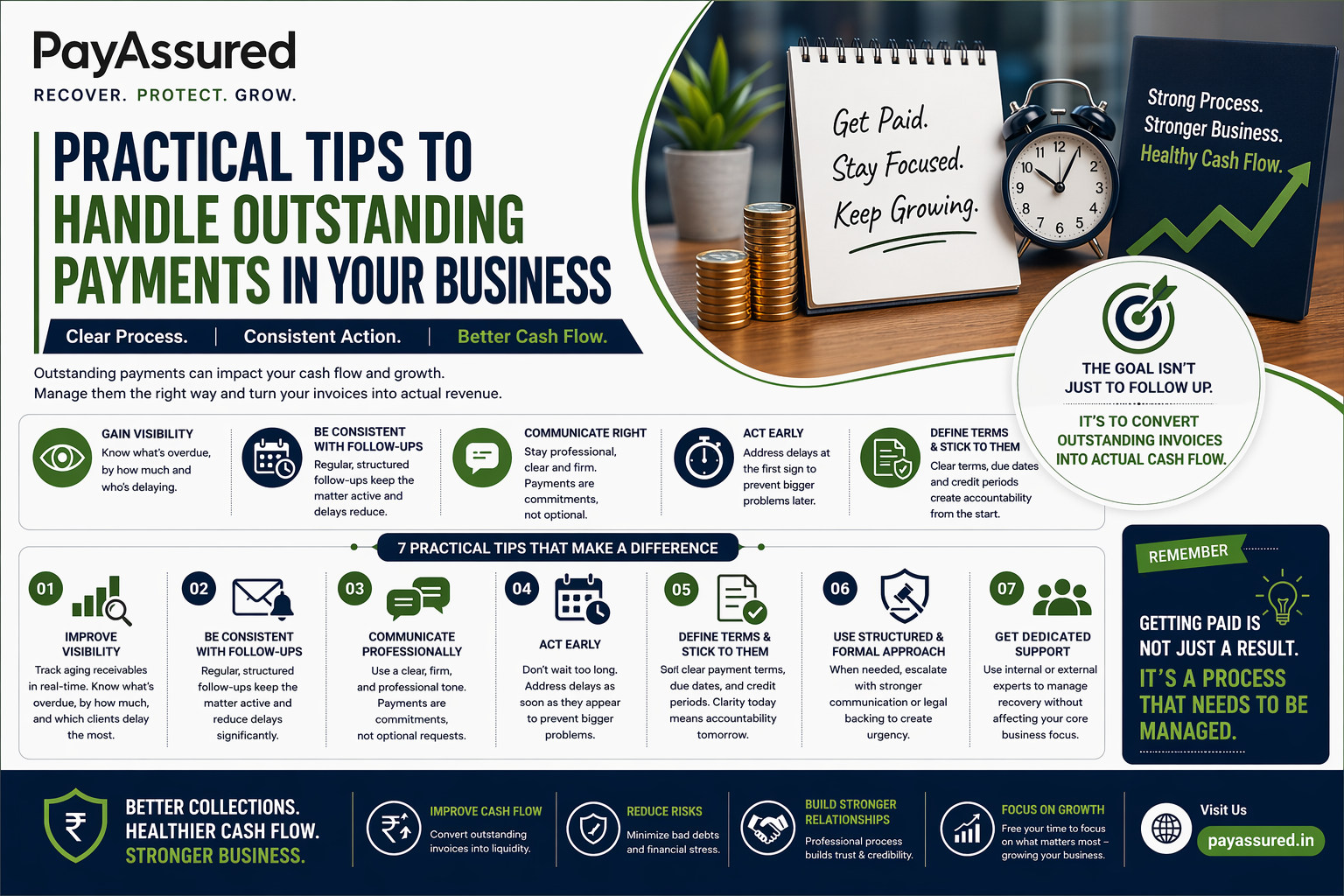
Many businesses don’t have a clear, real-time understanding of what’s overdue and by how much. Payments are tracked, but not actively monitored. When you start keeping a close eye on aging receivables, patterns become visible. You know which clients tend to delay, how long payments are pending, and where attention is required immediately.
That clarity helps you act sooner rather than later.
Another important shift is consistency in follow-ups.
Occasional reminders rarely work. Payments move when there is regular, structured communication. Not aggressive, not repetitive but consistent enough to keep the matter active. When clients know that follow-ups won’t stop, the chances of delays reduce significantly.
At the same time, how you communicate matters just as much as how often.
The tone needs to stay professional, clear, and firm. Instead of informal requests, communication should carry a sense of structure and expectation. It should reflect that the payment is not optional it’s a commitment that needs to be honored.
Timing also plays a crucial role.
One of the biggest mistakes businesses make is waiting too long before taking action. There’s always a tendency to give more time, hoping things will resolve. But delays often grow when they are not addressed early. Acting at the first signs of delay can prevent situations from escalating.
There’s also value in having defined payment terms and sticking to them.
Clear due dates, agreed credit periods, and documented expectations create accountability. When both sides understand the terms from the beginning, there’s less room for ambiguity later.
But even with all of this, there are cases where payments still don’t move.
That’s when the approach needs to shift.
Introducing a more structured and formal layer whether through stronger communication or legal backing often changes the situation. It signals seriousness and creates urgency without necessarily damaging the business relationship.
For many companies, managing this entire process internally can become overwhelming. Between operations, sales, and client management, recovery often gets pushed aside. Having a dedicated approach, whether in-house or with external support ensures that outstanding payments don’t lose momentum.
Because at the end of the day, the goal isn’t just to follow up.
It’s to convert outstanding invoices into actual cash flow.
And that doesn’t happen by chance. It happens when the process is clear, consistent, and handled with the right level of focus.
Because in business, getting paid is not just a result it’s a process that needs to be managed.